

7 Comfortable Gym Clothes for Short Workouts That Fit
Last Updated: November 7, 2026
Quick Summary
Comfortable gym clothes for short workouts should follow a three-phase formula: a light removable layer for the warm-up, a fitted tee or tank in a cotton-polyester blend with 5-7-inch inseam shorts for the work block, and the layer back on for cooldown. Fitted beats loose for anything under 30 minutes, as long as the fabric stretches where you bend.
- Dress for three phases: warm-up minutes 0-5, work block 5-25, and cooldown 25-30+.
- Shorts with a 5-7-inch inseam stay out of the way through lunges, squats, and quick footwork.
- A 90/10 cotton-polyester blend feels closer to cotton, while a 60/40 blend dries faster.
- Flatlock or bonded seams and tear-away labels reduce friction and scratching during repeated movement.
- A repeatable setup is two fitted tops, two pairs of 5-7-inch shorts, and one light layer.
Table of Contents
- Why Short Workouts Need Different Gym Clothes
- The 10 to 30 Minute Outfit Formula for Short Workout Clothes
- Best Petite Workout Clothing: Fit Tips for Shorter Frames
- Comfortable Workout Clothes: Fabrics, Seams, and What to Avoid
- A Simple Gym Outfit You Can Repeat All Week
- Gym Clothes for Short Men: Inseams, Taper, and Proportions
- Sweat, Temperature, and the Post-Workout Transition
- Try Your Next Short Workout at Pros Gym
- Frequently Asked Questions
Why Short Workouts Need Different Gym Clothes
A 15-minute session puts different demands on fabric than a two-hour bodybuilding split, which is why comfortable gym clothes for short workouts matter.
Short sessions compress everything. You warm up faster, sweat sooner, and cool down quicker.
The real problem is that most gym clothing is designed for the long haul. Marathon sessions reward moisture-wicking blends and roomy cuts.
Below, we break down exactly what to wear for a short workout, how to build a repeatable outfit formula, and how to size it whether you are 5'2" or 6'4".
The 10 to 30 Minute Outfit Formula for Short Workout Clothes
Most gym clothing advice assumes a long session.
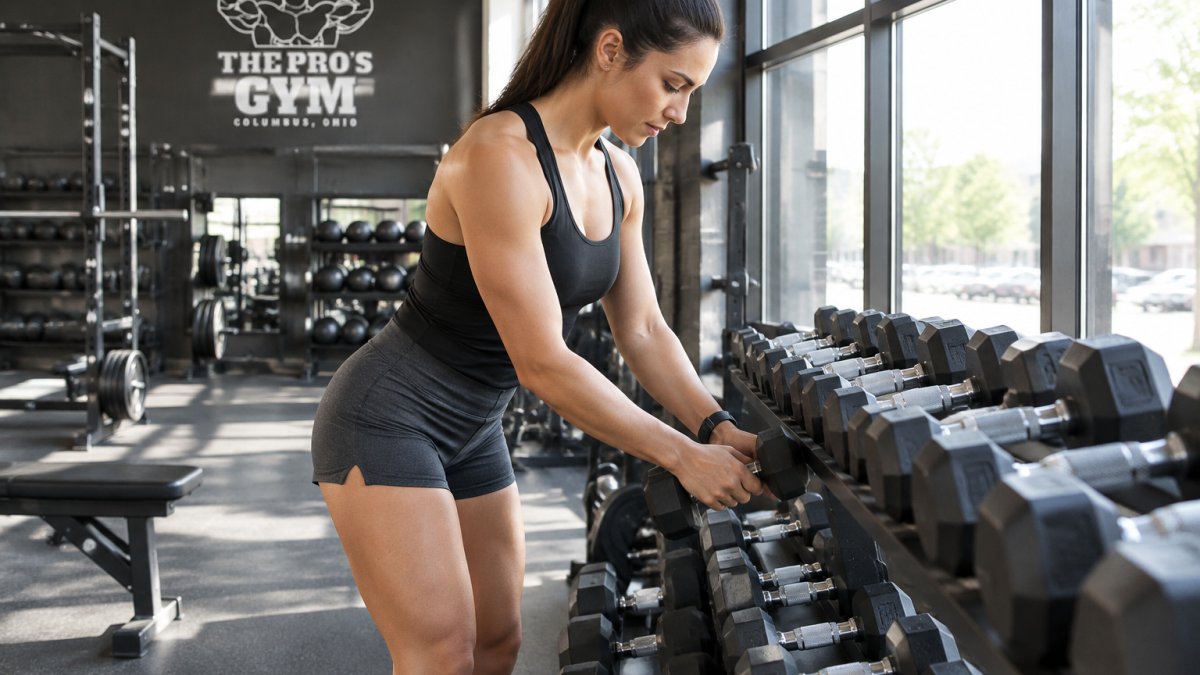
The three-phase rule: dress for the first five minutes, the middle block, and the five minutes after. Each phase has a different job, and the best short-workout outfit lets you move between them without a full change.
- Phase 1, Warm-up (minutes 0-5): Start with a light layer you can shed. A thin long-sleeve or zip hoodie over a fitted tee keeps joints warm while you ramp up, then comes off the moment you hit working temperature. A layer you cannot remove quickly is worse than no layer at all.
- Phase 2, Work block (minutes 5-25): This is where fit beats looseness. A fitted tee or tank in a cotton-polyester blend sits close enough to move with you without riding up, and shorts with a 5-7-inch inseam stay out of the way through lunges, squats, and quick footwork. Loose everything feels comfortable on the rack and turns into constant adjusting mid-set.
- Phase 3, Cooldown and exit (minutes 25-30+): Put the layer back on before you cool down. A fast temperature drop after a concentrated sweat spike can leave people damp and chilled, so a light layer and a quick-drying fabric help.
Match the outfit to the activity, not just the clock. A 15-minute strength block and a 15-minute walk ask different things of fabric:
- Strength training and circuits: Prioritize stretch and stay-put fit. Shorts with a bit of elastane and a high-rise waistband hold position through squats and deadlifts; a fitted top keeps the bar path clear.
- Walking and low-impact cardio: Prioritize breathability and minimal seams. A lightweight tee and 5-inch shorts reduce friction over repeated steps, and flat seams matter more than compression here.
- Cycling and spin: Prioritize a snug short that will not catch on the saddle and a top that does not flap. A 7-inch inseam with a tapered leg is a practical middle ground.
- Mobility and stretching: Prioritize range of motion. Softer blends and a looser-but-not-baggy cut let you move through end-range positions without fabric binding.
- Quick high-intensity intervals: Prioritize moisture-wicking and quick-dry. A concentrated sweat spike in 10 minutes punishes fabric that holds water, so a synthetic or cotton-poly blend sheds moisture faster than pure cotton.
A repeatable template you can apply in seconds: one fitted top, one short with a 5-7-inch inseam, one removable layer.
Watch out: buying loose everything to "feel comfortable" is the most common mistake in short sessions. You end up pulling shorts down and shirts back into place between sets, which wastes the little time you have.
Here is how each phase of a short session shapes what you wear.
| Phase | Minutes | What to wear | Why |
|---|---|---|---|
| Warm-up | 0-5 | Thin long-sleeve or zip hoodie over a fitted tee | Keeps joints warm and comes off quickly |
| Work block | 5-25 | Fitted tee or tank in cotton-polyester blend; shorts with 5-7-inch inseam | Stays put through lunges, squats, and quick footwork |
| Cooldown and exit | 25-30+ | Put the light layer back on | Fast temperature drop can leave you damp and chilled |
Best Petite Workout Clothing: Fit Tips for Shorter Frames
Best petite workout clothing comes down to proportion, not size. Shorter frames need shorter inseams, higher waistbands, and tops that do not swallow the torso.
Three fit adjustments make the biggest difference:
- Shorten the inseam. A 5-inch inseam on shorts and a 25-27 inch inseam on leggings keeps fabric from pooling at the ankle.
- Raise the waistband. High-rise bottoms stay in place through squats and deadlifts without constant adjusting.
- Size the top to the shoulder, not the length. A fitted top that ends at the hip bone looks intentional; one that ends mid-thigh looks borrowed.
For anyone under 5'4", petite-specific sizing is worth seeking out. Standard "small" often assumes a longer torso and limb, so the same size can fit the shoulders but hang past the knees. Look for brands that publish a fit guide with actual garment measurements, not just body measurements.
Comfortable Workout Clothes: Fabrics, Seams, and What to Avoid
Fabric: match the blend to the sweat spike. A 10 to 30 minute session produces a concentrated sweat spike rather than a long, steady output. That changes what you want:
- Cotton-polyester blends (roughly 60/40 to 90/10): A practical middle ground. The polyester moves moisture off the skin faster than pure cotton, while the cotton keeps the hand-feel soft. A 90/10 blend feels closer to cotton; a 60/40 dries faster.
- Moisture-wicking synthetics: Best for quick high-intensity intervals where you sweat hard and cool down fast. They shed moisture and dry quickly, which matters during the cooldown transition.
- Pure cotton: Comfortable at rest, but it holds moisture. In a short, intense session it turns into a wet layer that keeps you damp during cooldown. Fine for mobility work and walking; a poor choice for intervals.
- Elastane or spandex content: A small percentage in shorts and leggings lets fabric move through squats, lunges, and end-range mobility without binding. Stretch where you bend matters more than overall stretch. (Source: the impact of garment fit on athletic performance)
What to avoid: heavy cotton tees with thick screen prints, loose mesh that snags, and anything with a bulky waistband.
Short workouts mean you wear the same pieces more often and wash them more often, so durability is a comfort issue, not just a budget one.
- Check the wash label first. Frequent washing is the norm for short-session wardrobes. Cold water and air-drying preserve stretch and color far longer than hot water and a hot dryer, which break down elastane and shrink cotton blends.
- Turn pieces inside out and skip fabric softener. Softener coats technical fabrics and reduces their ability to move moisture; inside-out washing protects prints and seams.
- Judge cost per wear, not sticker price. A $30 top worn three times a week for a year costs far less per wear than a $15 top that pills after a month. The practical test is simple: divide the price by the number of washes you expect before it loses shape or stretch.
- Look for reinforced seams and a published fabric weight. Heavier knits hold shape longer; very thin knits feel great new but tend to stretch out at the shoulder and waistband first.
A common pattern is that the cheapest piece is rarely the most comfortable over time.
A Simple Gym Outfit You Can Repeat All Week
A simple gym outfit is one you can wear four days straight without thinking about it. The repeatable setup is two fitted tanks or tees, two pairs of 5-7-inch shorts, and one light layer, rotated and washed between sessions.
That rotation works because short workouts do not demand outfit variety. You are not dressing for a two-hour session with a full cooldown. You are dressing for 20 focused minutes, and the same pieces handle it every time.
For the top, the Pro's Gym Signature Tank is a 90/10 cotton-polyester blend with side seams and a tear-away label. If you prefer a tee, the Pro's gym Next Level Unisex T-Shirt is a lightweight, soft, form-fitting 60/40 cotton-polyester blend.
Two tops, two shorts, one layer. That is the whole wardrobe for a week of short sessions. Fewer decisions, less laundry, and a consistent fit every time you walk in.
Gym Clothes for Short Men: Inseams, Taper, and Proportions
Gym clothes for short men need a shorter inseam, a tapered leg, and a top that ends at the hip. Standard men's shorts often run 9-10 inches, which on a shorter frame hits below the knee and restricts movement. A 5-7-inch inseam fixes that instantly.
Three proportional adjustments matter most:
- Shorts: Choose a 5-7-inch inseam with a tapered leg. The taper keeps the short from flaring out and making legs look shorter.
- Tees: A fitted or slim fit that ends at the hip bone looks intentional. An oversized tee that runs past the waist adds length where you do not want it.
- Joggers and sweatpants: Look for a tapered ankle and a 27-29 inch inseam. Cuffed joggers work well because you can adjust the break at the ankle.
Compression shorts worn under looser shorts are a practical option for anyone who wants coverage without bulk. The compression layer stays put, and the outer short provides the look.
Sweat, Temperature, and the Post-Workout Transition
Short workouts create a fast temperature swing: you heat up in the first five minutes and cool down just as quickly. Dressing for that swing means choosing pieces that dry fast and a layer you can remove without a full change.
Moisture-wicking fabric matters more here than in long sessions. A short, intense block produces a concentrated sweat spike, and fabric that holds moisture leaves you damp and cold during the cooldown.
A light hoodie or long-sleeve layer helps in two ways. It keeps you warm during the first few minutes of warm-up, and you can pull it off once you are at working temperature. After the session, put it back on to stay warm while you cool down and head out.
Pros Gym offers showers and saunas, which can help with the post-workout transition.
Try Your Next Short Workout at Pros Gym
Short workouts only work when the space around them works too.
If you are in town for a few weeks, day and week passes let you keep your routine without a long commitment.
You can learn more about the gym and see what fits your schedule.
Your next short workout deserves clothes that stay put and a gym that stays open. Pros Gym offers 24-hour access, three floors of equipment, saunas and showers, and day or week passes for visitors.
Frequently Asked Questions
What are the most comfortable workout clothes for a quick session?
Look for lightweight, moisture-wicking fabrics with flat seams and a stretch blend that moves with you. A fitted tank or T-shirt paired with 5 to 7-inch inseam shorts or leggings covers most short workouts. The Pro's Gym Signature Tank is a 90/10 cotton-polyester blend. Avoid heavy cotton that holds sweat and thick seams that rub during repeated movement.
How should gym clothes fit for a short workout?
Fit matters more than brand for short sessions. Tops should allow full range of motion without riding up, and bottoms should stay in place through squats, lunges, or cycling. For shorter frames, a 5 to 7-inch inseam on shorts and a tapered leg on joggers prevent bunching. Petite sizing or hemming keeps leggings from stacking at the ankle, which reduces distraction and keeps your stride clean.
What is a good simple outfit to wear to the gym?
A simple gym outfit is a fitted T-shirt or tank, athletic shorts or leggings, and supportive shoes. Add a light hoodie for warm-up and a sports bra for support if needed. Keep fabrics quick-drying and seams flat. Repeating the same formula in two or three colorways removes daily decisions and keeps laundry manageable, which matters when you train often.
What fabrics are comfortable for workout clothes?
Combed ring-spun cotton blends, polyester-spandex mixes, and moisture-wicking synthetics work well for short workouts. Breathability and stretch matter more than thickness. Look for tear-away labels, side seams, and reinforced binding at the neck and armholes to reduce irritation. Quick-drying fabrics help you transition from gym to errands without staying damp, and they hold up better across repeated washes.
