

Gyms With Multiple Squat Racks: What to Look For
Table of Contents
- Why Gyms With Multiple Squat Racks Matter for Strength Training
- Gyms With Power Racks vs. Standard Squat Racks
- Squat Rack vs Power Rack: Which One Do You Need
- Gym With Weightlifting Platforms: A Complete Setup
-
Squat Rack Availability: How to Check Before You Join
- Step 1: Get the count in writing, not from memory
- Step 2: Observe at your actual training time, twice
- Step 3: Ask about peak-hour policy, not just peak hours
- Step 4: Check maintenance and downtime
- Step 5: Use a trial pass across two time slots
- Step 6: Read reviews for availability language, not star ratings
- How this directory handles corrections
- What to Verify When Evaluating a Gym's Strength Equipment
- Frequently Asked Questions
Last Updated: October 18, 2026
Why Gyms With Multiple Squat Racks Matter for Strength Training
Finding gyms with multiple squat racks is critical for serious strength athletes. Equipment availability directly affects workout quality and progress; a single rack means peak-hour waiting that breaks your training flow. (Source: a 2026 survey on fitness facility usage)
At Pros Gym, we know dedicated lifters need uninterrupted access to strength equipment. Our facility features multiple squat racks and power racks across three full floors, eliminating the frustration of competing for limited equipment.
The difference between one rack and multiple stations goes beyond convenience, it's about training consistency. Reliable access keeps you on program; facilities that lack redundancy force compromises: shorter sessions, lighter weights, or awkward timing.
Gyms With Power Racks vs. Standard Squat Racks
Power racks and standard squat racks serve different training needs, though both are essential for serious strength work.
A standard squat rack has two uprights with adjustable J-hooks and safety pins, built mainly for back squats and overhead presses.
Power racks are full-frame structures with four uprights, multiple attachment points, and extensive safety features. They accommodate squats, bench press, deadlifts with safety bars, rack pulls, and pin presses, and the extra space suits taller lifters.
Pros Gym stocks both types across our three floors.
Squat Rack vs Power Rack: Which One Do You Need
Your training style determines which equipment matters most to you.
If your primary goal is competitive powerlifting, a standard squat rack is often sufficient.
If you're training for bodybuilding, general strength, or a mixed program, a power rack is more valuable.
Many serious lifters need both: squat training in a standard rack, bench press and accessory work in power racks.
Gym With Weightlifting Platforms: A Complete Setup
A complete strength training facility includes dedicated weightlifting platforms in addition to squat racks.
Weightlifting platforms are specialized areas for Olympic lifting, clean and jerk, snatch, and related movements.
Pros Gym's three-floor layout includes weightlifting platforms and squat racks and power racks for strength-focused lifters.
When evaluating a gym, ask whether platforms are reserved for Olympic lifting or available for general barbell training.
Squat Rack Availability: How to Check Before You Join
Verifying squat rack availability before committing prevents expensive mistakes, but only if you check the right things and record what you find.
Most gym tours show you the best version of a facility: lights on, equipment empty, staff friendly. That tells you almost nothing about whether you'll get a rack at 6:15 PM on a Monday. The method below is the same one we use when we audit a facility for this directory.
Step 1: Get the count in writing, not from memory
Ask the front desk for the specific number of each station type: standard squat racks, power racks (four-post frames), Smith machines, and dedicated lifting platforms. Write the numbers down and ask staff to confirm them. Front-desk staff often know the total rack count but not the split between power racks and standard racks, if they can't answer, ask for the strength coach or facility manager.
Step 2: Observe at your actual training time, twice
A single visit is a snapshot; two visits on different days are a pattern. Train or tour at the exact time you plan to lift, and count three things:
- Total racks present (confirm the written count matches the floor).
- Racks in use on arrival and again 20 minutes later.
- People waiting, anyone near a rack with a loaded bar or a towel on the frame is in the queue.
If more than half the racks are occupied for your entire session, the facility is at capacity for your training window, regardless of total count. Six racks with five occupied is worse than three racks with one occupied. (Source: guidelines from the Occupational Safety and Health Administration (OSHA))
Step 3: Ask about peak-hour policy, not just peak hours
"When is it busy?" produces a vague answer. Better questions:
- "Do you cap memberships, or is access first-come?"
- "Is there a time limit on racks during peak hours?"
- "Do you run group strength classes that occupy the racks, and at what times?"
Class scheduling is the most common hidden cause of rack shortages. A gym with eight racks can feel like a gym with two if four are tied up by a 6 PM barbell class three nights a week. Ask to see the class schedule and note which blocks overlap your training window.
Step 4: Check maintenance and downtime
Ask how often racks are taken out of service and how members are notified. A well-run facility posts maintenance windows and schedules them off-peak; a poorly-run one has racks down unpredictably. During your visit, look for out-of-order signs, missing J-hooks, or racks with safety arms removed, each is a station you cannot use.
Step 5: Use a trial pass across two time slots
Many facilities offer a day pass or short trial. Use it twice: once in your preferred training window and once off-peak. The off-peak visit tells you whether the equipment is good; the peak visit tells you whether you can actually use it.
Step 6: Read reviews for availability language, not star ratings
Search reviews for phrases like "wait for a rack," "always busy," "plenty of racks," and "no wait." Availability complaints cluster around specific times, and reviewers often name them ("after 5 PM it's impossible"). Ignore star ratings; a gym can be well-loved and still unusable at your training time.
| Verification step | What to record | Red flag |
|---|---|---|
| Written count | Number of each station type, date, staff name | Staff cannot give a number |
| Peak observation (x2) | Racks present, in use, waiting | More than half occupied for the full session |
| Peak-hour policy | Class blocks, time limits, PT reservations | Racks reserved during prime hours |
| Maintenance | Notification method, out-of-service stations | Unpredictable downtime |
| Trial pass | Experience in your actual window | Consistent waits |
| Reviews | Time-specific availability comments | Repeated "always busy" mentions |
How this directory handles corrections
Counts change. When a reader reports a different number than the one listed, we re-check the location and update the entry with a new verification date. Report any mismatch with the date of your visit and the station type.
What to Verify When Evaluating a Gym's Strength Equipment
Beyond rack count, several factors determine whether a facility truly supports serious strength training, and the most useful check is a dated, station-by-station inventory.
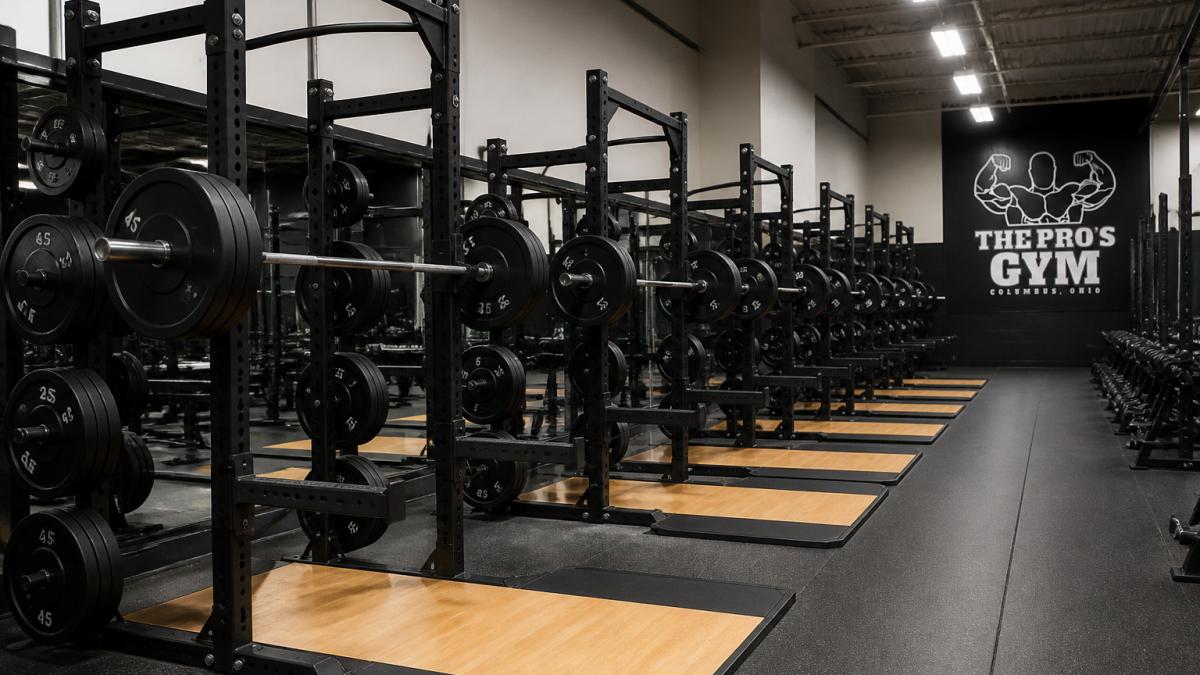
Build a station inventory, not a memory
For each location you are considering, record the following in one place, with the date you checked:
- Standard squat racks (two uprights, adjustable J-hooks, safety pins)
- Power racks (four-post frames with safety arms or straps)
- Squat stands (portable or fixed, no safety capture)
This split matters because "multiple squat racks" means different things to a powerlifter, a bodybuilder, and an Olympic lifter. A gym with six Smith machines and one power rack doesn't serve a lifter who needs to bail a failed squat onto safety arms. Count by type, and date the count.
Rack type and safety features to check on the floor
- Safety arms or straps: present, adjustable, and rated for your loads. Pin-and-pipe safeties are common; strap safeties are more forgiving but wear over time.
- J-hook condition: look for bent hooks, missing UHMW plastic, or hooks that don't seat firmly, a worn J-hook can let a loaded bar shift.
- Hole spacing: 1-inch spacing allows finer safety-height adjustment than 2-inch, which matters for shorter and taller lifters.
Barbell and plate inventory
Rack count is meaningless if bars and plates can't support simultaneous use. Check:
- Bar count versus rack count. Six racks and two Olympic bars means the facility is underequipped; a common working ratio is at least one bar per rack, plus spares.
- Bar type. Look for 20 kg / 45 lb Olympic bars with visible weight markings, smooth spin, and no severe bend. Note specialty bars (safety squat bar, trap bar, deadlift bar), they expand training options but are often stored separately.
- Plate denominations. Count 45, 25, 10, 5, and 2.5 lb plates. Plenty of 45s with few small plates limits warm-up and accessory work.
Spacing, flooring, and layout
- Rack spacing: 2-3 feet between frames is a common minimum for safe loading and spotting; elbow-to-elbow racks create collision risk during heavy lifts.
- Flooring: rubber or platform surfaces under racks; bare concrete signals the facility wasn't designed for dropped loads.
- Ceiling height and lighting: overhead lighting directly above the rack matters for spotting and video review; low ceilings limit overhead pressing.
Access, crowding, and cost, the practical comparison
Equipment quality is only half the decision. Compare locations on access hours (24-hour versus staffed), day-pass availability and price in USD, membership cost and contract length, peak-hour crowding at your training time, and distance from home or work. A facility with eight power racks 40 minutes away and closed at 9 PM may serve you worse than one with three racks five minutes away and open 24 hours.
Maintenance and replacement schedule
Ask when the racks were last replaced or refurbished, whether there's a preventive maintenance schedule, and how broken equipment is reported. A facility that replaces worn J-hooks and safety arms on a schedule demonstrates commitment; one that waits for failure does not.
Frequently Asked Questions
How many squat racks should a gym have to support serious lifters?
A facility serving serious strength athletes should have at least 2-3 squat racks or power racks available during peak hours. Busier gyms with multiple shift patterns may need 4 or more to prevent wait times. The ideal number depends on membership size and class schedules. Visit during your intended training time to assess actual availability rather than relying on stated counts alone.
What is the difference between a squat rack and a power rack?
A squat rack has two vertical uprights with adjustable safety bars and is designed primarily for squats. A power rack (also called a cage) has four vertical posts with multiple attachment points, allowing you to perform squats, bench press, deadlifts, and rows safely inside the frame. Power racks offer more versatility and built-in safety features, making them preferred by powerlifters and serious strength athletes.
How can I find a gym with multiple squat racks in my area?
Start by visiting potential gyms during your planned training time to observe rack availability firsthand. Ask staff about total rack count, maintenance schedules, and whether racks remain available during peak hours. Check online reviews from strength athletes and powerlifters, they often mention equipment quality and availability. Request a trial day or week pass to confirm the facility meets your needs before committing.
Should I look for a gym with weightlifting platforms?
Yes, if you perform Olympic lifts or heavy deadlifts. A gym with weightlifting platforms, dedicated raised flooring designed to absorb impact, protects both the equipment and the facility's structure. Platforms typically include bumper plates, bars rated for Olympic lifting, and proper spacing. If you focus solely on barbell squats and bench press, a standard squat rack or power rack may be sufficient, but platforms add significant value for comprehensive strength training.