

Personal Training for Powerlifting: How to Choose and Get Results
Last Updated: October 30, 2026
Quick Summary
Personal training for powerlifting means a coach who sets your program, selects accessory work, reviews your squat, bench and deadlift technique, and adjusts load week to week. Choose one by checking their meet-prep track record, programming reasoning, feedback quality and injury handling before you commit.
- The coach sets your program, picks accessory exercises, and adjusts load based on how you respond each week.
- Ask how many lifters the coach has taken through a full meet prep and how they performed.
- Ask the coach to walk through a recent athlete's 12-week block and explain each phase.
- Watch for red flags: no sample program, no named athletes, or dismissing pain as something to train through.
- Divide the monthly fee by coached contact hours to compare the true hourly rate across packages.
Table of Contents
- What a Personal Trainer Does for a Powerlifting Athlete
- How to Choose a Powerlifting Coach
- What a Powerlifting Training Program Should Include
- Squat, Bench Press and Deadlift Technique Coaching
- Online Powerlifting Coaching vs. In-Person Training
- Pricing, Inclusions and What to Ask Before You Commit
- Booking Your First Session at Pros Gym
- Frequently Asked Questions
Choosing a personal trainer for powerlifting is harder than it looks. Most gyms advertise "strength coaching," but few coaches have actually trained through a meet, managed a heavy deadlift cycle, or known when to pull an athlete back from a sore lower back. This guide from This guide walks through what good personal training for powerlifting athletes looks like, how to evaluate a coach, and what to ask before you commit.
Some want a coach who can build a meet prep block. Others just want to stop guessing. The right choice depends on where you are right now.
What a Personal Trainer Does for a Powerlifting Athlete
A personal trainer for a powerlifting athlete does more than count reps. The coach sets the training program, selects accessory exercises, watches technique on the squat, bench press and deadlift, and adjusts load based on how you respond week to week. That is the core job. The rest is execution.
Good coaching manages training volume and intensity over time, which matters more than any single session. A coach who simply tells you to add weight every week will eventually produce a plateau or an injury. The real skill is knowing when to push and when to hold.
Watch out: A trainer who never changes your program is not coaching. Ask how often they review your numbers and what triggers a change.
How to Choose a Powerlifting Coach
Most lifters pick a coach on personality and price. To compare local options side by side on coaching, equipment and access, see Columbus Ohio powerlifting gyms. The better approach is to score candidates against a short list of criteria you can verify before you pay.
1. Competition and coaching track record. Ask how many lifters the coach has taken through a full meet prep and how those lifters performed relative to their prior bests.
2. Credentials that actually apply. Ask which certifications a coach holds and whether any have a strength or powerlifting focus. A credential is a floor, not proof.
3. Programming reasoning. Ask the coach to walk through a recent athlete's 12-week block: why the volume started where it did, when intensity rose, and what triggered the deload. A coach who can explain the 'why' behind each phase is programming.
4. Technique feedback quality. In a trial session, watch whether the coach names a specific change, foot position, bar path, bracing sequence, lockout timing, and then shows you the correction. Feedback that stays at "tighten up" or "looks good" is not coaching.
5. Communication cadence and responsiveness. Confirm how often you check in, what channel you use, and the expected response time. A common pattern is weekly check-ins with video review plus same-day replies to urgent questions.
6. Injury boundaries and referral habits. A good coach asks about injury history up front, modifies load around pain rather than pushing through it, and refers you to a physical therapist or physician when a problem is outside their scope.
7. Athlete references. Ask for two current or former athletes at your experience level and contact them. Ask what changed in their training, how the coach handled a plateau or a missed lift, and whether they renewed.
Score each candidate on these seven points before you commit. The coach who scores highest on verifiable specifics is usually the better long-term choice, even if they are not the cheapest or the most available.
What a Powerlifting Training Program Should Include
A sound powerlifting training program covers the three main lifts, the supporting work that strengthens weak points, and a clear plan for progression. For a deeper look at how it differs from bodybuilding, read powerlifting vs bodybuilding training. The main lifts usually appear several times a week in different intensity ranges. Accessory work targets things like upper-back strength, hip drive and triceps lockout.
Look for periodization. A program that stays at the same intensity month after month rarely produces sustained gains. Common structures move from higher-volume work toward heavier, lower-rep work as a meet approaches. Your coach should be able to explain the phase you are in and why.
Recovery belongs in the plan too. Sleep, nutrition and deload weeks all affect how much work you can absorb. A program that ignores recovery looks strong on paper and fails in practice.
Squat, Bench Press and Deadlift Technique Coaching
Technique is where personal training earns its cost. Small changes in foot stance, bar position, or how you brace can move a lot of weight more safely. A coach watching from the side can catch a rounding lower back or a bench press bar path that drifts over the face, problems that are hard to notice from the inside.
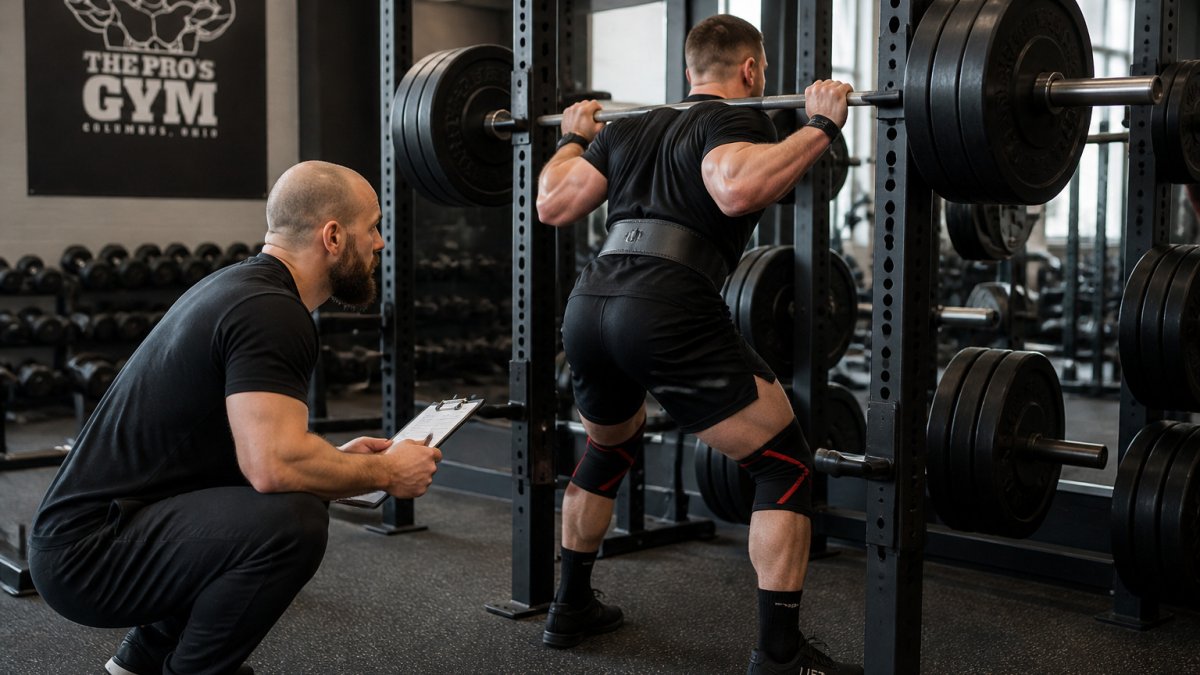
Video review helps. Record your sets from a few angles and compare them with your coach's notes. Over time you learn to feel the position you are aiming for, which reduces how often you need correction. (Source: U.S. Bureau of Labor Statistics)
Form does not stay fixed. Fatigue, fast weight increases and new equipment all change how you move. Ongoing feedback catches those shifts before they turn into injuries.
Online Powerlifting Coaching vs. In-Person Training
Online coaching and in-person training suit different lifters. In-person coaching gives the coach direct eyes on your lifts, which is the strongest advantage for technique. You can also get immediate correction between sets. This matters most for newer lifters and for anyone working near a meet.
Online coaching works well for experienced lifters who train consistently and can record their own video. You can review an online athlete coaching option and its membership structure before deciding. Programming, check-ins and form review happen remotely. The tradeoff is that the coach sees less of your daily training and your technique depends more on the quality of your video. Lifters with access to a gym and a coach who can review footage often do well with this format.
Many athletes split the difference: in-person sessions for technique work, with remote programming between visits. Decide based on how much hands-on feedback you need and how often you can train under supervision.
Pricing, Inclusions and What to Ask Before You Commit
Personal training for powerlifting is priced in several common structures, and the sticker price tells you little until you know what each one includes. Compare formats on total monthly cost and on the specific services bundled in.
Per-session in-person training. You pay for hands-on time, with technique correction between sets. Programming may or may not be included; ask whether the session fee covers your weekly plan or only the hour on the floor. This format costs the most per hour but gives the most direct feedback, which suits newer lifters and anyone close to a meet.
Monthly remote coaching. A flat monthly fee usually bundles a written program, video form review, and scheduled check-ins, with communication by app or email. The value depends on check-in frequency and response time, so confirm both. Remote packages are often the most cost-effective for experienced lifters who train consistently and can film their own sets.
Hybrid packages. A smaller number of in-person sessions per month combined with remote programming and video review. This is a common middle path for lifters who want periodic hands-on technique work without paying for every session in person.
Self-guided programming. A one-time or subscription program without a coach attached. It is the cheapest option, but you supply your own technique feedback and progress decisions, which is a poor fit for novices and for anyone working through pain or a plateau.
When you compare quotes, put them in the same units. Ask each coach to state:
- The total monthly cost and what it covers (sessions, programming, video review, check-ins).
- Session length and how many sessions are included.
- Check-in frequency and expected response time.
- Whether meet-day handling or peaking blocks cost extra.
- The minimum commitment and cancellation terms.
- What happens to your fee if you are injured or need to pause.
Current rates and package terms for our training options are listed on our website, and they can change, so confirm the figures there or with our team before you commit. See the online affiliate coaching pricing and commitment terms for the current details. Use the questions above to compare any quote, ours or another coach's, on equal terms.
The table below compares the common coaching formats so you can weigh cost against what each one includes.
| Format | Best for | Key difference |
|---|---|---|
| Per-session in-person | Newer lifters, meet prep | Hands-on correction between sets; highest cost per hour |
| Monthly remote coaching | Experienced, consistent lifters | Flat fee with programming and video review; check-ins by app or email |
| Hybrid packages | Periodic technique work | In-person sessions plus remote programming |
| Self-guided programming | Budget-minded, experienced lifters | Cheapest option; you supply your own technique feedback |
Booking Your First Session at Pros Gym
Our facility is built for serious strength work, with heavy equipment, 24-hour access and personal training for lifters who want structure. If you are not ready to commit to a membership, our day and week passes let you train here while you see how the space fits your goals. You can request a guest pass to try a session first.
Start by choosing the format that suits you, in-person or online, and asking what a first session covers. A good first session should include a training history review and a technique assessment on the main lifts. Use it to judge whether the coach explains things well and listens to your answers.
Ready to train with a coach who knows powerlifting? Book your first session at Pros Gym and see how structured coaching can fit your lifts.
Frequently Asked Questions
What does a personal trainer do for a powerlifting athlete?
A personal trainer for a powerlifting athlete builds a training plan around the squat, bench press and deadlift, sets training volume and intensity, and adjusts loads week to week based on how the lifter recovers. They also check technique on the three lifts, correct form breakdowns and track progress over time. Good trainers pay attention to accessory work, mobility and recovery, not just the main lifts. Ask a prospective trainer how they monitor progress and how often they review your training log.
How do I choose a powerlifting coach?
Look for a coach with direct experience in competitive powerlifting, either as a lifter, a coach of lifters or both. Ask whether they can explain why they program specific exercises and how they handle fatigue and plateaus. Check whether they review form through video and give written feedback. Confirm what is included in the price, how communication works between sessions and how they adapt programming for injuries or schedule limits.
Is personal training worth it for powerlifting?
Personal training is most useful for lifters who have plateaued, want structured progression or are preparing for a meet. It is less necessary for experienced lifters who already have reliable programming and can self-correct technique. The value depends on the coach's expertise, how closely they monitor you and whether the program fits your goals. Consider a trial period or a limited number of sessions before committing to a longer plan.
What is the difference between a personal trainer and a powerlifting coach?
A general personal trainer focuses on overall fitness, including strength, conditioning and body composition goals. A powerlifting coach specializes in maximal strength on the squat, bench press and deadlift and usually has competition experience. Many powerlifting coaches also hold general certifications, but their programming is built around peak performance on the three lifts. If your goal is a meet total, a coach with powerlifting experience is typically the better fit.
