

What to Wear for Unstaffed Gym Workouts: 7 Essentials
Last Updated: November 14, 2026
Quick Summary
For unstaffed gym workouts, wear a fitted, moisture-wicking top and secure bottoms with an adjustable waistband, plus supportive shoes matched to your lift. In an unstaffed gym, every piece must stay put through a solo session, since no one is there to hand you a spare layer or flag a wardrobe failure.
- Choose moisture-wicking polyester, nylon, or cotton-poly blends instead of cotton, which holds sweat and stays damp.
- High-support sports bras suit lifting and plyometrics, while medium support works for stretching and floor exercises.
- Cross-trainers are the most versatile shoe; running shoes are best for treadmill and cardio days only.
- Tuck dangling drawstrings and remove jewelry, since loose items can catch on barbells, cables, and machine parts.
- Pack a filled water bottle, towel, lock, spare moisture-wicking socks, and a light layer for cool floors.
Table of Contents
- Why Unstaffed Gym Workouts Change What You Wear
- Fabrics That Work Harder Than Cotton
- What to Wear to the Gym for Female Lifters
- What to Wear to the Gym for Male Lifters
- Best Shoes for Gym Workouts: Match the Shoe to the Lift
- What to Bring to the Gym: A Complete Pre-Workout Checklist
- Fit, Safety, and Equipment Interference
- Packing Your Bag Before Your Next Solo Session
- Frequently Asked Questions
Why Unstaffed Gym Workouts Change What You Wear
What to wear for unstaffed gym workouts comes down to one principle: you have to solve every problem yourself. At Pros Gym, 24-hour access means you can train when you want, but no one may be at a front desk to hand you a towel or spot a wardrobe failure. Dress for self-sufficiency, not for the mirror. (Source: American Council on Exercise guidance on workout clothing)
No Front Desk, No Backup: Plan for Every Variable
In an unstaffed setting, you may not have anyone to lend you a forgotten item. So your clothing has to cover more ground.
-
Temperature swings: empty floors run cool at 3 a.m. and warm at 6 p.m. Layers solve both.
-
Equipment waits: fewer spotters means more solo setup time, so clothing that moves freely matters more.
-
Safety: fitted clothing won't catch on a bar or a cable. Loose sleeves and long drawstrings can.
That last point is the one most guides skip. In a packed gym someone notices a snagged cable. Alone, you are the only person who will.
Fabrics That Work Harder Than Cotton
The best fabric for gym clothes is a moisture-wicking blend, not cotton. Cotton holds sweat against your skin, gets heavy, and stays damp. A breathable, lightweight synthetic blend pulls sweat away and dries fast.
Look for polyester, nylon, or a cotton-poly blend on the label. The American Council on Exercise guidance on workout clothing makes the same point: breathable, moisture-wicking fabric keeps you cooler and more comfortable through a session.
Moisture-Wicking, Breathable, and Lightweight
Three words decide whether a fabric works for you. Moisture-wicking moves sweat off your skin. Breathable means air passes through. Lightweight means it won't drag when wet.
A common mistake is buying a heavy cotton tee because it feels soft in the store. It will feel like a wet towel by your third set. Save the cotton for your rest days.
What to Wear to the Gym for Female Lifters
For female lifters, the core outfit is a supportive sports bra, a fitted top, and leggings or shorts with an adjustable waistband. In an unstaffed gym, the standard is higher: every piece has to stay put through a full solo session, because there is no one to flag a wardrobe failure or hand you a spare layer.
Sports Bra: Match Support to the Session
Support is the first decision, not the last. A high-support sports bra keeps everything in place through heavy sets, jump rope, and treadmill intervals. Medium support is enough for stretching and mobility work. Look for wide, adjustable straps and a band that sits flat against your ribs; a band that rides up is a sign the fit is wrong, not that the bra is worn out.
- High support: lifting, running, and any plyometric work.
- Medium support: stretching, yoga, and floor exercises.
- Avoid: clasp-free pullover bras with thin straps for heavy lifting; they shift under load.
Tops: Fitted Beats Loose Near Equipment
A fitted tank or tee that will not ride up during overhead work is the safe default. Loose shirts and long hems can catch on a barbell collar or a cable attachment, and in an empty gym you are the only one who will notice the snag. Look for side-seamed construction and reinforced binding; those details hold shape through repeated washes and keep the top from twisting mid-set.
Bottoms: Squat-Proof and Secure
Leggings or athletic shorts with a secure, adjustable waistband are the workhorses. Check squat-proof fabric in person by holding it up to the light; a fabric that turns sheer under tension will do the same under a barbell. For shorts, an inner liner prevents chafing on long sessions and keeps the hem from riding up on the leg press or treadmill.
- Leggings: best for lifting, stretching, and cool floors.
- Shorts with liner: best for cardio and warm facilities.
- Joggers: best for warm-ups and cool, empty floors at odd hours.
Layers for Empty Floors
A lightweight hoodie or jogging vest earns its place because empty floors run cool at 3 a.m. and warm at 6 p.m.
For a top that handles all of it, the Pro's Gym Signature Tank offers a clean athletic fit that allows full range of motion during training.
Watch out: a loose tank that feels fine in the mirror can ride up over your head during overhead presses; test the range of motion before you load the bar.
What to Wear to the Gym for Male Lifters
Male lifters should start with a fitted tee or tank, athletic shorts or joggers, and supportive shoes. The fit is the whole game. A loose shirt catches on bars; a fitted one does not. In an unstaffed gym, that difference matters more because no one is watching your setup for a snag.
Tops: Fitted Tee or Tank in a Breathable Blend
A fitted tee or tank in a breathable blend is the default. Avoid baggy sleeves near moving equipment; a loose sleeve can catch on a barbell collar or a cable attachment mid-rep. Look for a shirt with a tapered waist and a hem that stays put when you raise your arms overhead. A cotton-poly blend is a reasonable middle ground: it feels soft like cotton but dries faster, which matters on a long solo session. (Source: Occupational Safety and Health Administration guidelines)
Bottoms: Shorts, Joggers, and Compression
Shorts for leg days, joggers or athletic pants for warm-ups and cooler floors. A drawstring that dangles is a hazard near a treadmill belt or a cable stack; tuck it or choose a flat waistband. Compression shorts under loose shorts prevent chafing on long sessions and keep the outer short from riding up on the leg press.
- Shorts: best for leg days and warm facilities.
- Joggers: best for warm-ups and cool, empty floors.
- Compression layer: best for long sessions and chafe-prone skin.
Socks and Support
Moisture-wicking socks, not cotton. Blisters start with damp feet, and in an unstaffed gym you cannot grab a spare pair from a front desk. Bring a spare pair in your bag.
The Pro's Gym Elite Training Tee uses a 60/40 cotton-poly blend with a modern fit for a soft, lightweight feel.
Watch out: a baggy tee that feels comfortable in the mirror can bunch under a barbell during bench presses; test the fit with your arms overhead and a bar across your chest before you commit to it for a heavy day.
Best Shoes for Gym Workouts: Match the Shoe to the Lift
The best shoes for gym workouts depend on the lift, not the look. Running shoes are built for forward motion (Are You Wearing the Right Shoes For Your Workout?). Lifting wants a stable, flat base. Wearing the wrong pair is a real safety issue.
Cross-Trainers, Runners, and Flat-Soled Lifting Shoes
- Cross-training shoes: the best all-rounder. Stable enough to lift, flexible enough for cardio and lateral movement.
- Running shoes: best for treadmill and cardio days only. Their soft, cushioned soles wobble under a heavy squat.
- Flat-soled lifting shoes: best for squats and deadlifts. A firm, flat base keeps you grounded and stable.
A common mistake is squatting in thick running shoes, whose cushioning can feel unstable under load. If you only own one pair, cross-trainers are the more versatile choice.
What to Bring to the Gym: A Complete Pre-Workout Checklist
What to bring to the gym is a short list, but every item earns its place when no one is around to lend you one. Pack the night before so nothing gets skipped at 5 a.m.
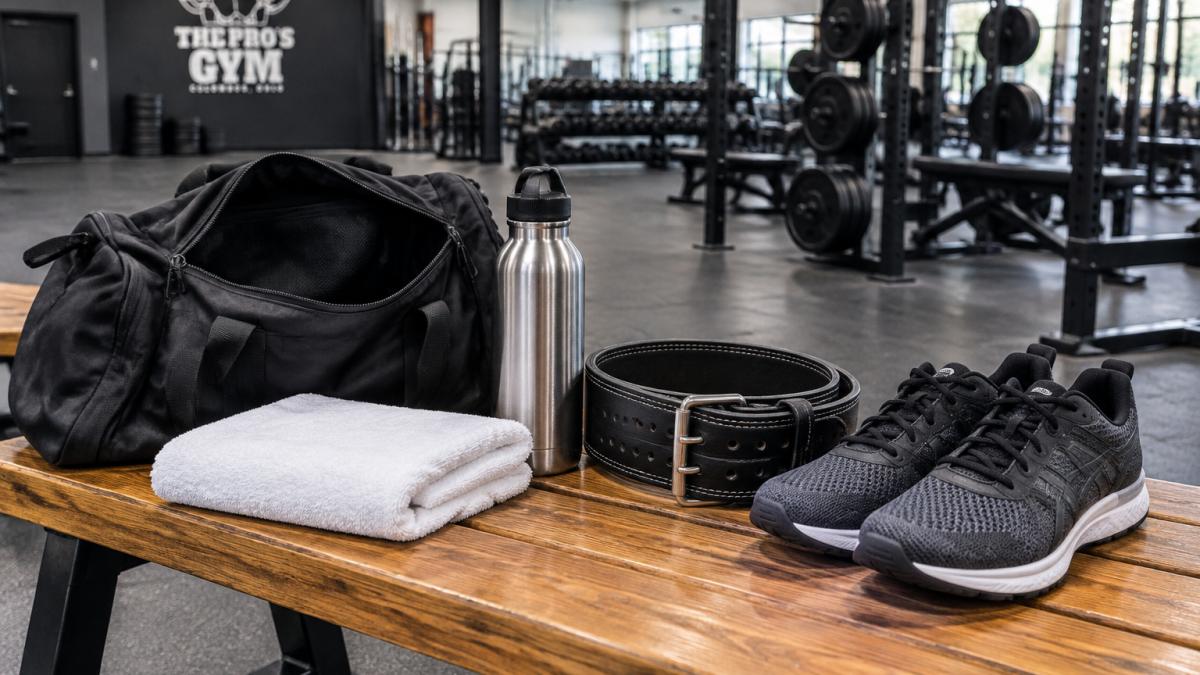
- Water bottle, filled
- Absorbent gym towel
- Lifting belt and straps, if you use them
- Lifting shoes or cross-trainers
- Moisture-wicking socks and a spare pair
- Lock for your locker
- Pre-workout snack and a post-workout shake
- Headphones and a charged phone
- A light layer for cool floors
A towel is an item people often forget. The Pro's Fitness Club Towel is 100% cotton terrycloth, sized at 11 by 18 inches, with hemmed edges.
Fit, Safety, and Equipment Interference
Proper fit is a safety feature, not a style choice. Loose clothing and dangling accessories can catch on barbells, cables, and machine parts. In an unstaffed gym, that risk goes up because no one is watching.
- Keep it fitted: snug sleeves and hems near moving equipment.
- Secure the extras: tuck drawstrings, remove dangling jewelry, tie back long hair.
- Check range of motion: raise your arms and squat before you start. If fabric pulls, change.
- Watch out: baggy pants over a bench or treadmill belt can snag mid-rep. That is how solo sessions turn into injuries.
The Occupational Safety and Health Administration guidance on workplace safety stresses removing hazards before work begins. Treat your gym setup the same way.
Packing Your Bag Before Your Next Solo Session
Packing your bag is the last step, and it decides how smooth your solo session goes. Build a routine: clothes, shoes, towel, water, belt, lock. Check it once at the door.
Here is a quick reference for matching your outfit to the workout:
| Workout | Top | Bottom | Shoes |
|---|---|---|---|
| Heavy lifting | Fitted tee or tank | Shorts or leggings | Flat-soled lifting shoes |
| Cardio | Lightweight breathable tee | Shorts or joggers | Cushioned running shoes |
| General training | Fitted tee | Athletic pants | Cross-trainers |
| Stretching and mobility | Tank or tee | Leggings or joggers | Cross-trainers or barefoot |
Dress for the session you planned, not the one you might improvise. A little prep means you walk in ready and train without distractions.
Training alone takes discipline, and the right gear removes the small obstacles that break a routine. Pros Gym gives you 24-hour access across three full floors of new and classic equipment, plus saunas, showers, and free towel service so you can reset after a solo session.
Frequently Asked Questions
What should I wear to an unstaffed gym?
Wear moisture-wicking, breathable fabrics that let you move through a full range of motion, plus supportive shoes matched to your training. Because nobody is at the front desk, dress for every variable: a lightweight layer for cold early hours, a towel for sweat, and bottoms with an adjustable waistband that stay put without a spotter. Avoid loose jewelry and dangling drawstrings that can catch on benches, racks, or cables when you are training alone.
What should women wear for an unstaffed gym workout?
Start with a supportive sports bra rated for your activity level, then add a fitted tee or tank that will not ride up during floor work. Leggings or shorts with a secure waistband handle squats and stretching without adjustment. Bring a lightweight hoodie or jogging vest for layering if the gym is cool at off-peak hours. Choose shoes based on your lift: flat-soled shoes for squats and deadlifts, cushioned cross-trainers for cardio and general movement.
Can I work out at the gym in regular clothes?
You can, but everyday cotton holds sweat, clings when wet, and restricts range of motion during deep lifts. Regular clothes also lack the support a sports bra or fitted bottom provides, and loose hems can catch on equipment. If you forgot your kit, choose the stretchiest, lightest items you own and skip exercises that need a full range of motion. A dedicated workout outfit makes solo sessions safer and more comfortable.
What should I avoid wearing when lifting weights?
Skip loose jewelry, long necklaces, and dangling hoodie strings that can snag on barbells or cables. Avoid slick-soled fashion sneakers for heavy squats and deadlifts, since they reduce stability under load. Cotton-heavy fabrics soak through and chill you during rest periods. Also avoid bottoms with weak elastic that slide during floor work. Choose fitted, moisture-wicking athletic wear with an adjustable waistband and flat-soled or cross-training shoes for lifting.
